

Inbox placement is earned, not claimed.
We don't publish delivery rates we haven't measured. Here is what we do to protect your sending: who we let on the platform, what we require, and who you talk to when something changes.

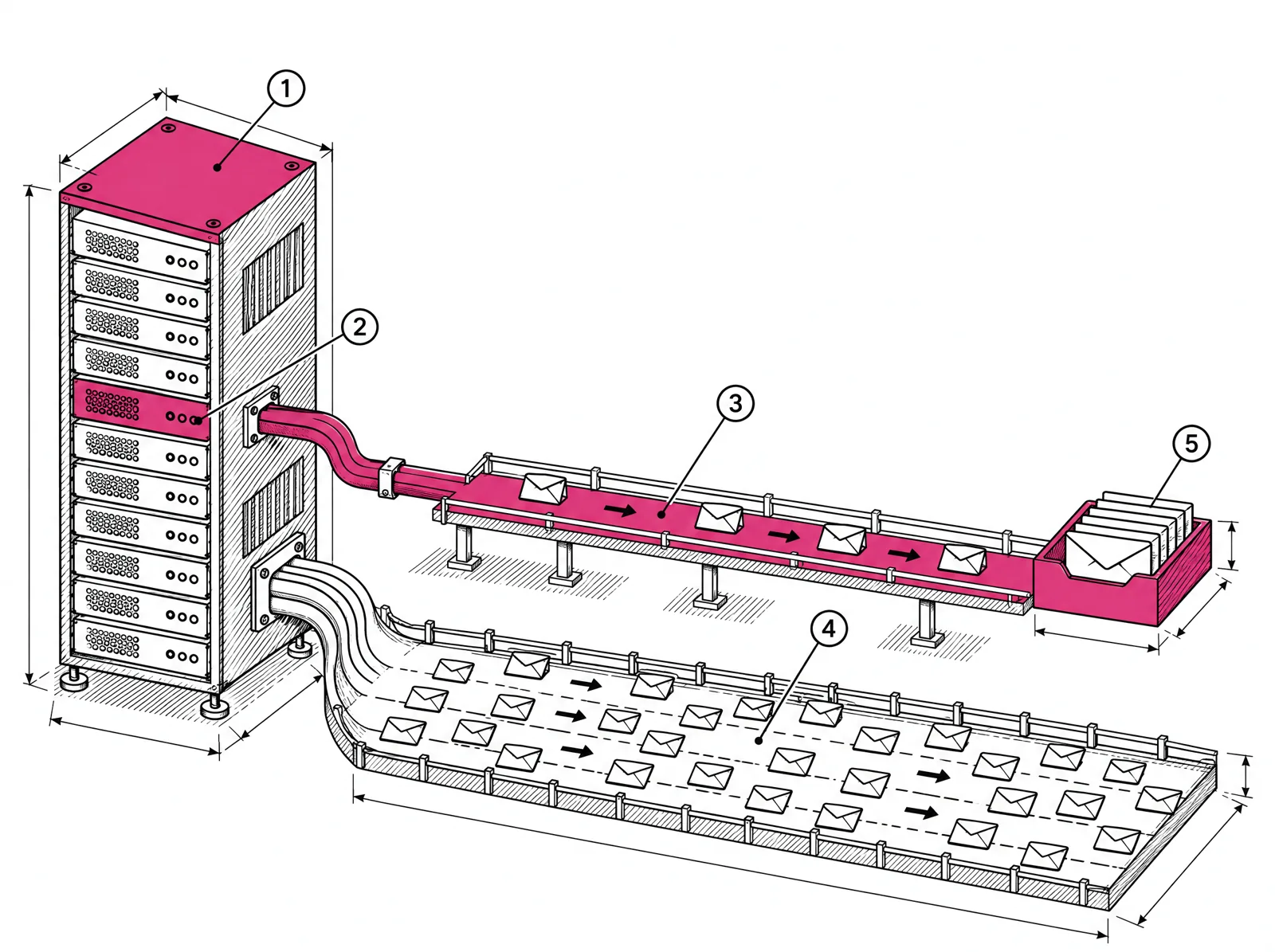
- 1Incoming senders
- 2Review gate
- 3Who, what, where from
- 4Content checks
- 5Approved to send
- 6Refused
How we protect your inbox placement.
Account review
No account sends until we know who it is, where its list came from and what it will send.
Refused senders
Cold outreach, purchased lists and high-risk content are turned away at the door.
Authentication
SPF, DKIM and DMARC on your own domain before your first campaign.
Complaint watch
Every account is watched against the limits mailbox providers set.
Dedicated IPs
From 500,000 emails a month, your own IPs, warmed up with you.
A named contact
High-volume senders work with a person who knows their sending.
Who we don't send for.
Shared IPs are only as good as the worst sender on them. These are refused outright:
- Cold outreach
- Purchased, rented or scraped lists
- Crypto
- Adult content
- Gambling
- MLM
- Get-rich-quick offers
Affiliate offers, supplements and lending get extra review and closer monitoring. Details in the Acceptable Use Policy.
Your domain, signed and verified.
Mailbox providers check who sent a message before they decide where it goes. We set up three records with you.
- SPF lists the servers allowed to send for your domain.
- DKIM signs each message so it can't be altered on the way.
- DMARC tells providers what to do when a check fails.

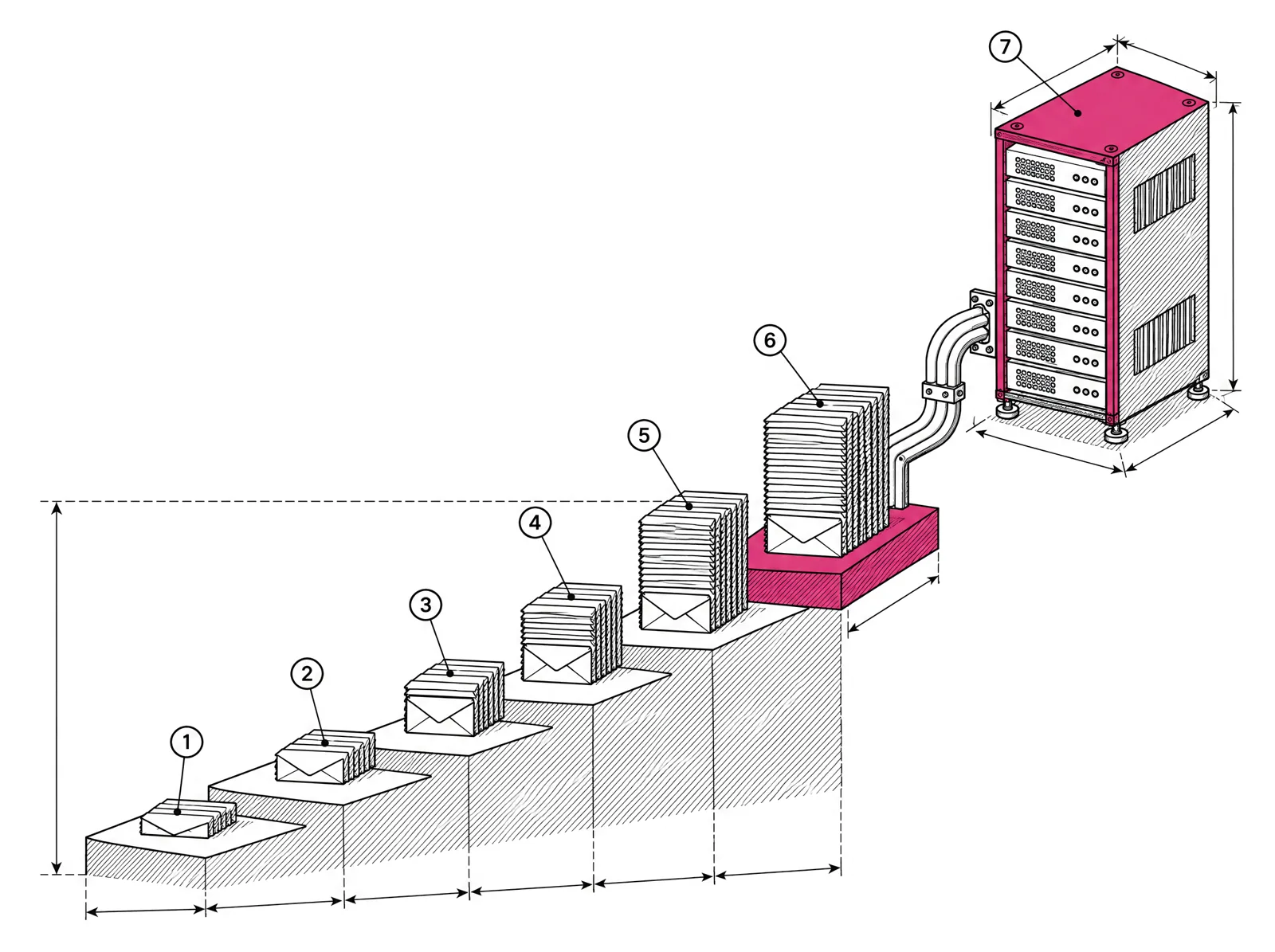
New IPs climb one step at a time.
A new IP has no history, so mailbox providers watch it closely. We start with your most engaged readers and raise volume step by step as providers accept it, until your whole list goes out.
- A warm-up plan built around your schedule
- Most engaged segments first
- Your old platform can keep sending while we ramp up
Marco DeLuca, Deliverability Lead.
Senders on 500,000 emails a month or more work with Marco directly. When placement changes, you write to someone who already knows your domains, IPs and history, not to a queue.
Deliverability questions
Do you publish inbox placement rates?
Not yet. We publish only numbers we have measured on our own platform over a stated period. Until we have that data, we tell you how we work instead.
What happens during account review?
We look at who you are, where your list came from, how people signed up, and what you plan to send. Your trial starts when we approve the account.
What if my complaint rate rises?
We contact you before it reaches the 0.3% limit Gmail and Yahoo set for bulk senders, and we work out the cause with you. If complaints keep rising we may pause sending to protect your reputation and other customers.
Do I need my own domain?
Yes. You send from a domain you control, with SPF, DKIM and DMARC in place. We help you set up the DNS records and check them before your first campaign.
How long does IP warm-up take?
It depends on your volume and how engaged your list is. We plan the steps with you and raise volume as mailbox providers accept it.
Send from a platform that turns bad senders away.
7-day trial with 10,000 emails, after a quick account review.